
GIA Is Changing the Rules: Why IGI Is the Safer Choice for Your Lab-Grown Diamonds
Lab-grown diamonds are becoming increasingly popular, and the way they are certified is evolving alongside them. As a buyer, it’s important to understand what this means for your purchase.
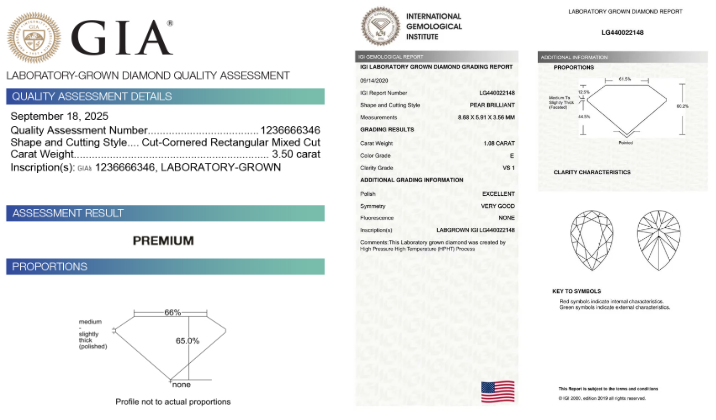
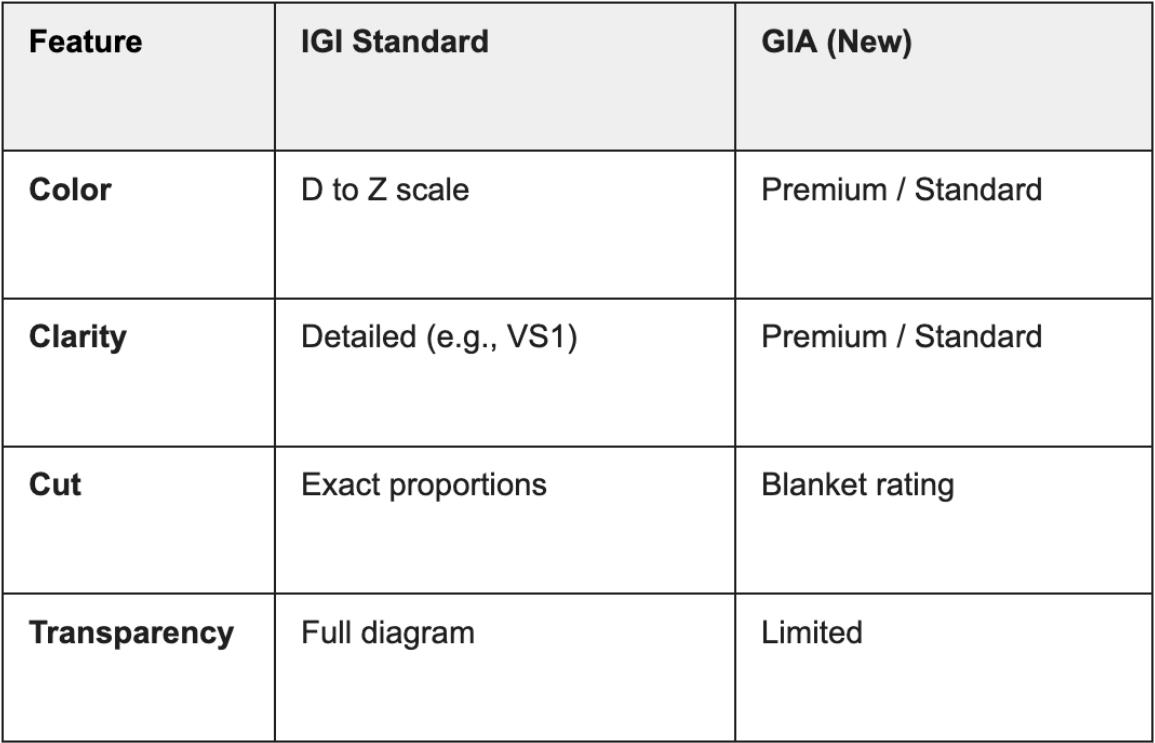
From 1 October 2025, the Gemological Institute of America (GIA) will simplify its certification system for lab-grown diamonds. Instead of using the traditional 4Cs grading system, GIA will classify these diamonds simply as either “Premium” or “Standard”.
This represents a significant shift. While GIA remains highly respected for natural diamond grading, this new approach for lab-grown diamonds no longer provides the level of transparency that discerning buyers expect.
The result is a genuine loss of detail. You can no longer distinguish the subtle differences that determine a diamond’s true value. For instance, a D (VS1) diamond and an E (VS2) diamond could both be grouped under the same “Premium” category.
The IGI Advantage: What the 4Cs Actually Tell You
This is exactly where the International Gemological Institute (IGI) shines. IGI continues to provide full transparency through complete 4Cs grading for lab-grown diamonds, including detailed reports on polish, symmetry, and fluorescence.
Cut: Precision, Not Estimation
IGI provides exact measurements of angles and proportions, rather than a generalised grade. This is crucial because only precisely balanced proportions create the sought-after brilliance and “fire” in a diamond. With IGI data, you can independently verify key indicators such as the “Hearts & Arrows” effect.
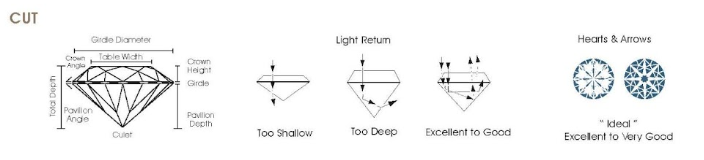
(IGI, 2026)
Clarity: A Detailed Map of Your Diamond
IGI includes a comprehensive inclusion map, known as a Clarity Plot. Not every “VS1” diamond is identical, and this diagram shows the exact location of inclusions such as feathers or crystals. This allows you to identify genuinely “eye-clean” diamonds with greater confidence.
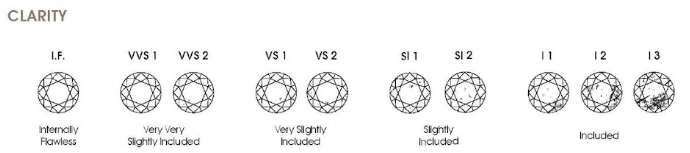
(IGI, 2026)
Colour: Accuracy You Can Rely On
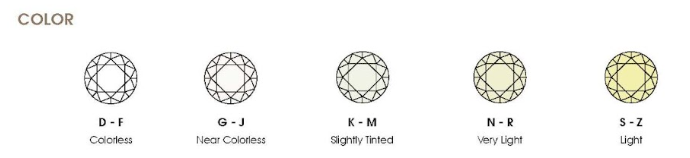
Rather than broad categories, IGI uses precise colour grading on the internationally recognised D–Z scale. (IGI, 2026)
While other laboratories are moving towards simplified classifications, IGI maintains the full grading spectrum—from D (completely colourless) to Z (noticeably tinted).
Why this matters:
A D-colour diamond is rarer and more valuable than an F-colour diamond. However, under a simplified system, both could receive the same “Premium” label.
Only with IGI certification can you see exactly where your diamond sits on the scale—ensuring you pay a fair price for the quality you receive.
Why Certification Matters
Diamond certification provides independent, third-party verification of quality. It confirms whether your diamond is lab-grown and not natural, and it offers essential documentation for insurance, resale, and valuation purposes. In a market where visual differences can be extremely subtle, a detailed certificate is vital for peace of mind.
For buyers who value quality, IGI’s strength lies in complete transparency. Vague categories can lead to overpaying for average stones, whereas IGI’s precise grading helps you identify true value.
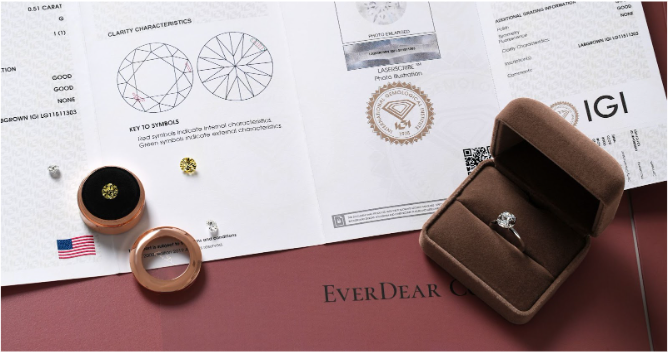
For example, when comparing two visually similar diamonds, IGI’s detailed cut data allows you to determine which stone delivers superior brilliance. This ensures your budget is invested in measurable quality, rather than unclear labels.
IGI certification is widely preferred for its detailed 4Cs grading. While GIA remains a trusted authority, its simplified system for lab-grown diamonds offers less depth of information. Currently, lab-grown diamonds account for approximately 54% of IGI’s business, compared to 16% for natural diamonds.
The Bottom Line: Transparency Builds Trust
For buyers of lab-grown diamonds, third-party certification is an essential safeguard. It protects your purchase and provides an objective assessment of quality. Although GIA continues to be a respected name, IGI’s detailed grading system makes it the stronger choice for lab-grown diamonds—offering the clarity, confidence, and transparency you need in an evolving market.
